Why Indian Businesses Need ERP in 2026
In 2026, Indian businesses are evolving faster than ever before. With increasing competition, digital transformation, and changing customer expectations, companies can no longer rely on manual processes or disconnected tools to manage their operations.
Businesses today are expected to be faster, more efficient, and data-driven. This shift has made ERP (Enterprise Resource Planning) systems not just useful—but essential.
The question is no longer “Should you implement ERP?” The real question is: “How long can your business survive without one?”
The Changing Business Landscape in India
India is witnessing a massive shift towards digitization. From small businesses to large enterprises, everyone is moving towards automation and integrated systems.
Key challenges businesses are facing in 2026:
- Increasing operational complexity
- Growing competition across industries
- Rising customer expectations
- Need for real-time data and insights
- Difficulty managing multiple tools and systems
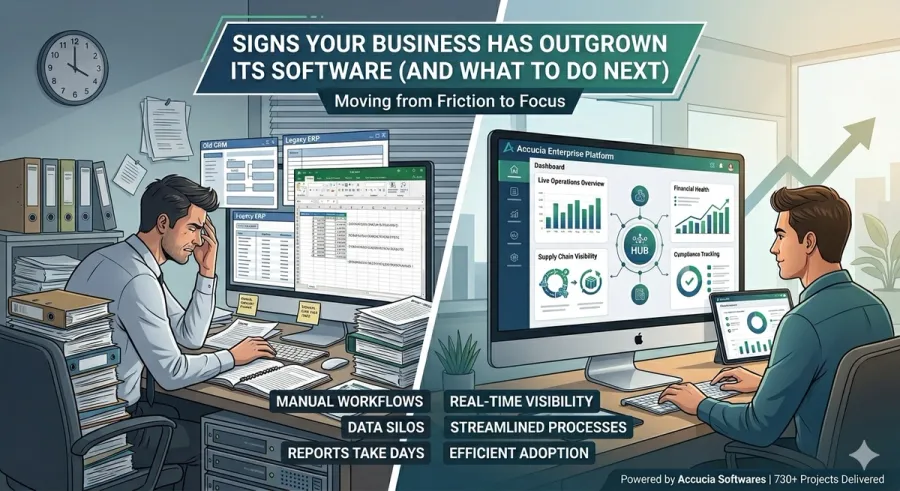
Traditional methods like spreadsheets, manual tracking, and disconnected software systems are no longer sufficient.
👉 Businesses need a centralized system that connects everything.
That system is ERP.
What is ERP and Why It Matters
ERP (Enterprise Resource Planning) is a unified software system that integrates all core business processes into a single platform.
It connects departments like:
- Finance
- Inventory
- Sales
- HR
- Procurement
- Operations
Instead of working in silos, all departments operate with shared, real-time data.
👉 ERP transforms your business from fragmented operations to a connected ecosystem.
Why ERP is Critical for Indian Businesses in 2026
1. Eliminates Operational Inefficiencies
Many Indian businesses still rely on manual processes or outdated systems. This leads to:
- Data duplication
- Human errors
- Delayed decision-making
ERP automates workflows and reduces dependency on manual work.
👉 Result: Faster operations and fewer mistakes.
2. Provides Real-Time Business Insights
In today’s market, decisions based on outdated data can be costly.
ERP systems provide:
- Real-time dashboards
- Financial insights
- Performance tracking
👉 This helps business owners make faster and smarter decisions.
3. Improves Financial Control
Financial mismanagement is one of the biggest reasons businesses struggle.
ERP ensures:
- Accurate accounting
- Expense tracking
- Budget management
- Compliance with regulations
👉 Businesses gain complete visibility over their finances.
4. Enhances Inventory Management
Inventory issues can directly impact revenue.
Common problems:
- Overstocking
- Stockouts
- Poor tracking
ERP systems solve this with:
- Real-time inventory tracking
- Automated stock alerts
- Demand forecasting
👉 Result: Better inventory control and reduced losses.
5. Enables Scalability
As businesses grow, their operations become more complex.
Without ERP:
- Systems break under pressure
- Processes become chaotic
ERP provides a scalable structure that grows with your business.
👉 You don’t need to rebuild your system every time you scale.
6. Improves Customer Experience
Customers expect fast responses, accurate information, and seamless service.
ERP helps businesses:
- Process orders faster
- Track deliveries
- Maintain customer records
👉 Better service leads to higher customer satisfaction and retention.
7. Reduces Operational Costs
Manual processes and inefficiencies increase costs.
ERP reduces:
- Labor costs
- Errors
- Wasted resources
👉 Businesses become more profitable with optimized operations.
The Problem with Not Using ERP
Businesses that avoid ERP often face:
- Lack of data visibility
- Poor coordination between departments
- Delayed decision-making
- Increased operational risks
- Difficulty scaling
👉 Over time, these issues compound and slow down growth.
Custom ERP vs Off-the-Shelf ERP
One of the biggest decisions businesses face is choosing between:
Off-the-Shelf ERP
- Ready-made solutions
- Limited customization
- Lower initial cost
Custom ERP Development
- Tailored to business needs
- Scalable and flexible
- Better integration with existing systems
At Accucia Softwares, we focus on custom ERP software development that aligns with your business processes instead of forcing your business to adapt to software limitations.
How Accucia Softwares Helps Businesses Implement ERP
At Accucia Softwares, we understand that every business is unique.
We don’t just provide software—we provide solutions.
Our approach includes:
1. Business Analysis
We understand your current challenges, workflows, and goals.
2. Custom ERP Development
We build tailored ERP systems designed for your specific business requirements.
3. Seamless Integration
We ensure smooth integration with your existing tools and systems.
4. Scalable Architecture
Our ERP solutions are designed to grow with your business.
5. Ongoing Support
We provide continuous support and updates to keep your system optimized.
Our expertise in enterprise software solutions, ERP systems, and business automation helps Indian businesses achieve efficiency, scalability, and long-term growth.
Industries That Benefit Most from ERP
ERP is not limited to one industry. It is essential across multiple sectors:
- Manufacturing
- Retail & E-commerce
- Healthcare
- Logistics & Supply Chain
- Real Estate
- Education
- Service-based businesses
👉 Any business with multiple processes can benefit from ERP.
ERP Trends in India for 2026
The future of ERP is evolving rapidly.
1. AI-Powered ERP Systems
Automation and predictive analytics are becoming standard.
2. Cloud-Based ERP
Businesses are moving towards cloud ERP for flexibility and accessibility.
3. Mobile ERP Solutions
Access business data anytime, anywhere.
4. Data-Driven Decision Making
ERP systems are becoming the backbone of business intelligence.
👉 Businesses adopting these trends will stay ahead of the competition.
Common Mistakes Businesses Make
Even when implementing ERP, businesses often make mistakes:
- Choosing software based on price, not need
- Overcomplicating the system
- Ignoring user training
- Lack of proper planning
👉 The key is to implement ERP strategically.
The ROI of ERP Systems
ERP is not an expense—it is an investment.
Benefits include:
- Increased efficiency
- Better decision-making
- Reduced operational costs
- Improved productivity
👉 The return on investment becomes visible within months.
Final Thoughts
In 2026, ERP is no longer optional for Indian businesses—it is essential.
Businesses that adopt ERP:
- Operate more efficiently
- Scale faster
- Stay competitive
Those that don’t risk falling behind.
At Accucia Softwares, we believe that the right ERP system can transform how businesses operate and grow.
Upgrade your business systems.